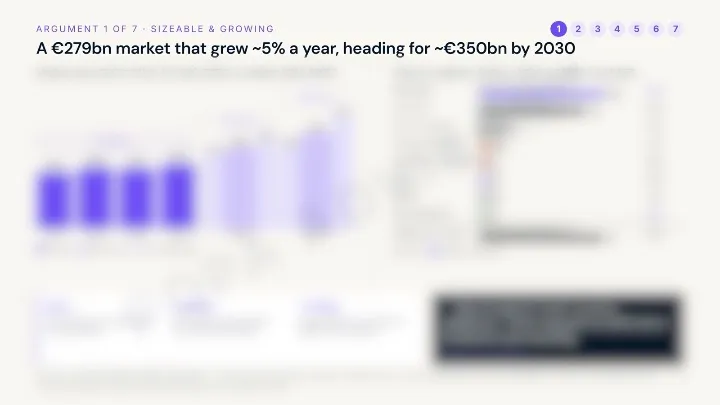
Europe may be throwing its waste away, but not its money. In 2024 the waste market across the EU27, the UK, Norway and Switzerland was worth €279bn, growing ~5% a year since 2021. In our base case it reaches ~€350bn by 2030 (low to high case €320–380bn) and ~€410bn by 2035, with ~70% of the growth in treatment and recycling.
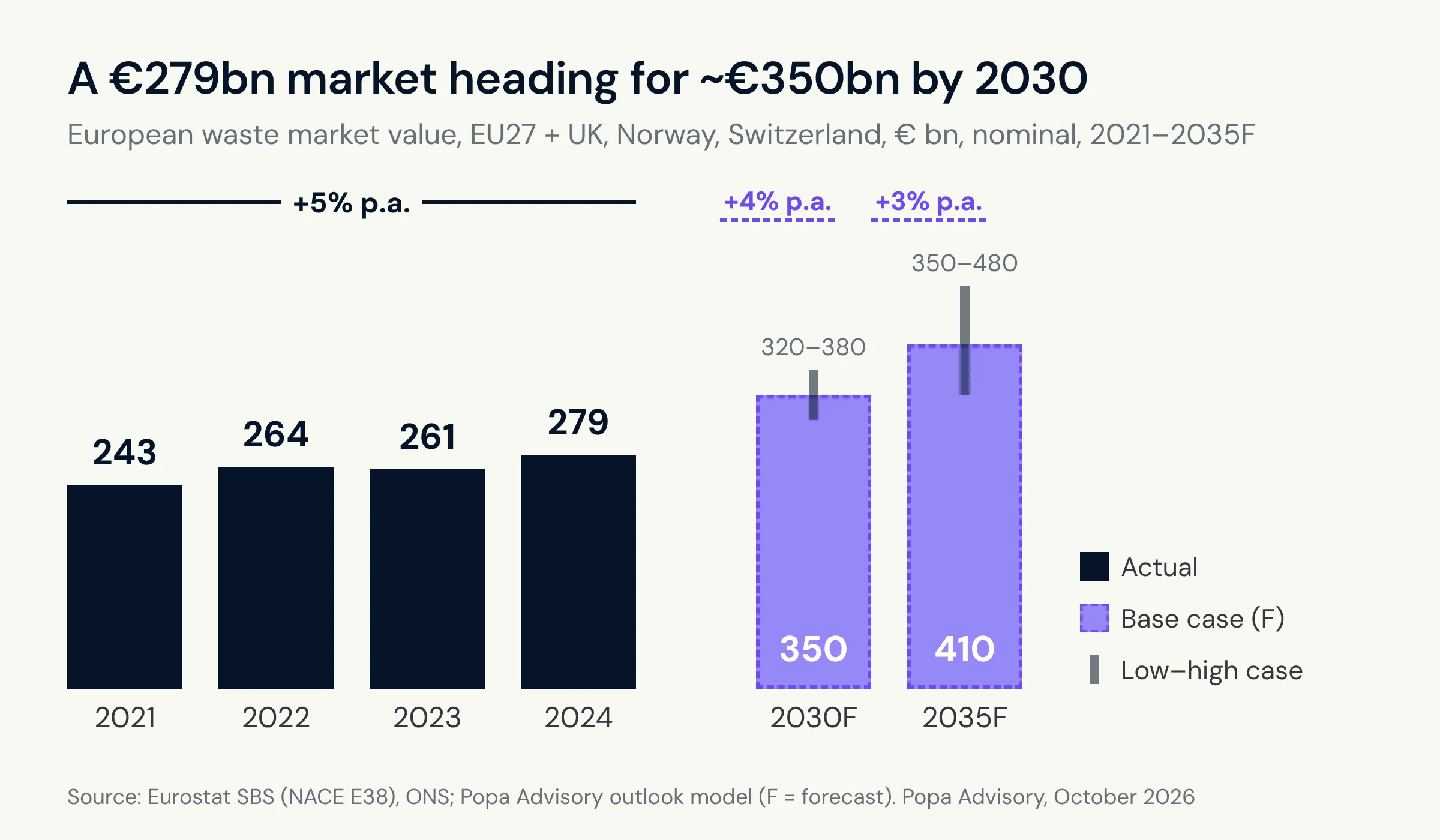
Chart 1: European waste market value, EU27 + UK, Norway, Switzerland, € bn, 2021–2035F. Source: Eurostat SBS, ONS; Popa Advisory outlook model.
Growth comes from price, not tonnes
The surprise is where the growth comes from. Municipal waste is flat at ~232 Mt, growing ~1% a year. Of the +€29bn added between 2021 and 2024, ~€24bn came from price: refuse-collection prices rose 33% between December 2019 and December 2025. Landfill taxes ranging from €32/t in Romania to €154/t in the UK, and a proposed carbon price on incineration from 2031 (~€52/t at €100/t CO₂), mean that revenue moves with fees, taxes and carbon costs, not with tonnes.
Regulation writes the order book
EU rules cap landfill at 10% of municipal waste by 2035 and set municipal recycling targets of 60% by 2030 and 65% by 2035. The EU27 recycles 48% today, and 13 member states are far from the landfill cap, with Greece at 81% and Romania at 76% of municipal waste landfilled. From 21 November 2026, the ban on plastic waste exports to non-OECD countries adds ~0.74 Mt to be treated in Europe. Binding dates from 2030 (60% municipal and 70% packaging recycling) to 2035 lock in demand for recycling and treatment capacity.
The margin sits in the plants
Not every business model benefits equally. Across 41 large European waste operators, energy-from-waste operators earn a median 31% EBITDA margin and hazardous waste specialists 25%, against 17% for integrated groups, 10% for collection and sorting and 6% for metals traders. The sector's EBITDA pool grows from €41bn to ~€59bn by 2035, with ~75% of the new €18bn in treatment and recycling.
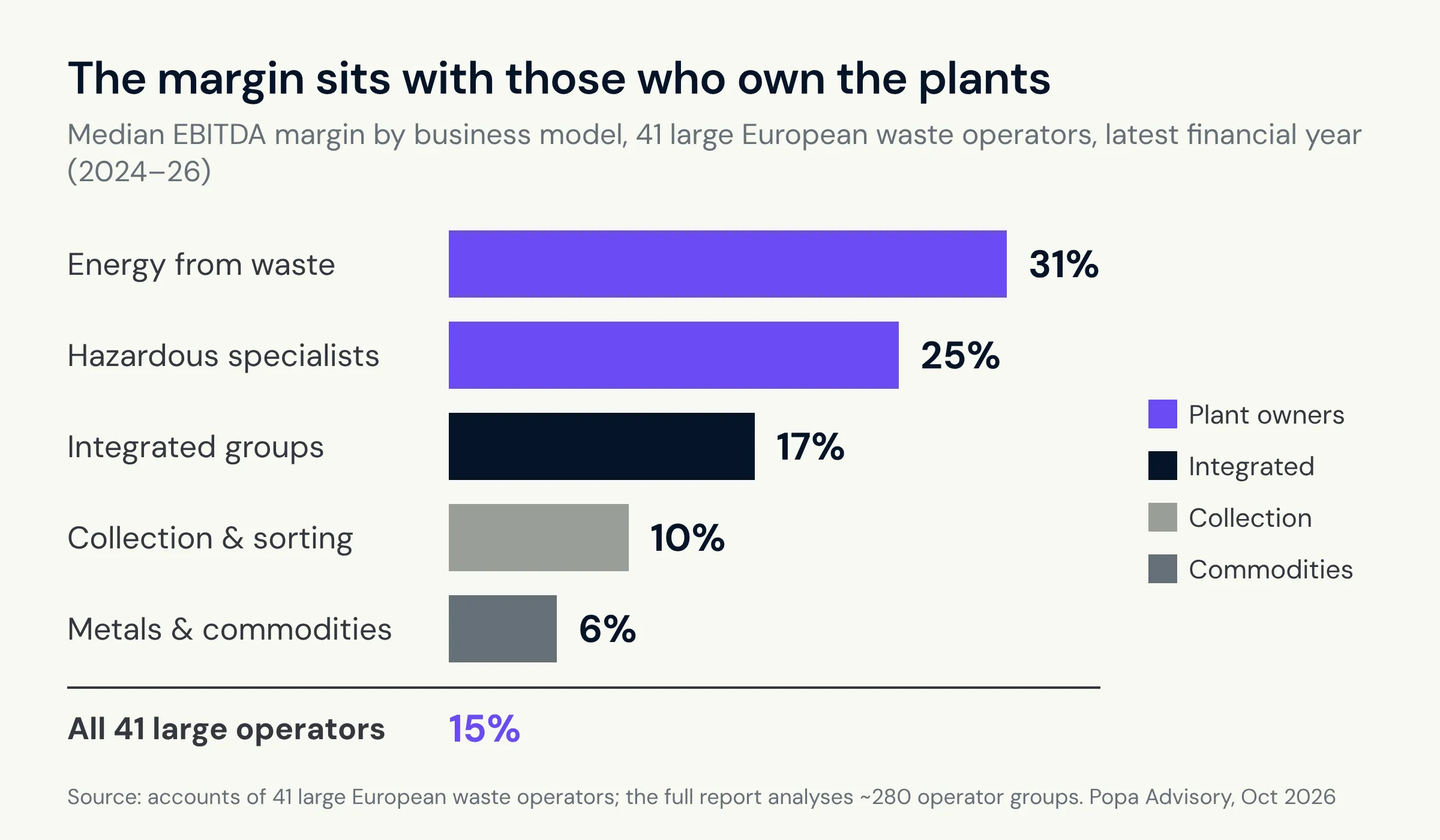
Chart 2: Median EBITDA margin by business model, 41 large European waste operators, latest financial year (2024–26). Source: company annual reports and accounts; the full report analyses ~280 operator groups; Popa Advisory analysis.
A fragmented market, now in play
The 15 largest players hold only 20% of the market; the EU27 counts ~49,000 waste firms, 40,000 of them micro firms. Waste firms invest ~€18bn a year and need ~€3bn a year more to meet EU targets, taking potential capex to ~€21bn a year. Capital is responding: 4 of the 5 largest disclosed deals of 2024–26 went to financial investors, from Urbaser (~€5.6bn enterprise value) to Renewi. And Central and Eastern Europe is opening up: in 2026, deals involving Brantner (11 Romanian sites), Scholz and Saubermacher all bring Austrian, CEE or Romanian exposure into play.
Dragos Popa, Popa Advisory · Data as of October 2026. Sources: Eurostat, ONS, company filings, EU legislation; analysis by Popa Advisory.